
The Hidden Costs of Messy HR
Messy HR rarely looks like a crisis, but it quietly drains time, energy, and profit through rework, confusion, and avoidable manager stress. Let’s break down the most common productivity leaks in SMBs and look at simple, realistic fixes you can start using right away.
1/3/20263 min read
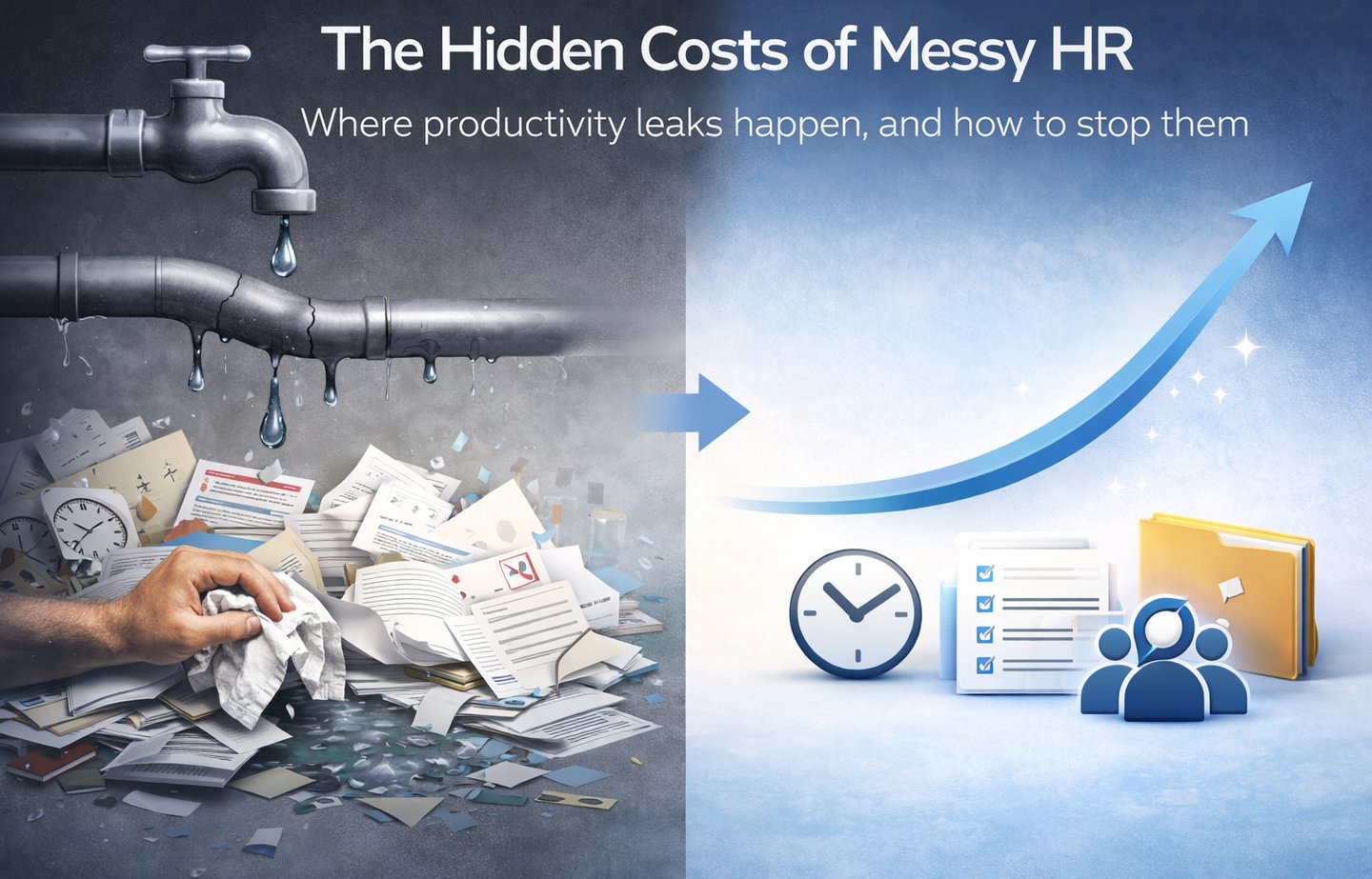
Where productivity leaks happen, and how to stop them
“Messy HR” usually does not look dramatic. It looks like small inconsistencies that pile up: unclear expectations, uneven onboarding, manager avoidance of feedback, scattered documentation, and policies that exist but are applied differently depending on the day. In SMBs, these issues can hide behind hard work and good intentions for a long time. Then the business grows, the volume increases, and the cost becomes impossible to ignore.
The cost of messy HR is not limited to HR. It shows up in slower execution, higher turnover, manager burnout, and a customer experience that feels less reliable. The good news is that you do not need to rebuild everything to stop the bleeding. You need to identify the most common leaks and address them with simple systems that make performance consistent.
Leak 1: Role confusion and unclear ownership
When employees are unclear about who owns what, work slows down. People wait for approvals, effort gets duplicated, or issues get escalated that should be handled at the lowest level. Managers get interrupted constantly, and decision quality drops because decisions are made under pressure. A practical fix is to define ownership for the workflows that create the most friction, then clarify what “done” looks like and where the current templates and decisions live.
Leak 2: Hiring and onboarding that rely on improvisation
Improvised onboarding creates uneven performance and can increase early turnover risk, especially when new hires do not get role clarity and predictable support. SMBs often feel they do not have time for structure, but the lack of structure creates more work later through mistakes, rework, and repeated questions. A practical fix is to standardize the first two weeks with a short checklist, clear role expectations, basic training priorities, and a scheduled manager check-in cadence. Research on newcomer adjustment supports the value of structured socialization practices because they reduce uncertainty and support faster adjustment.
Leak 3: Managers delaying feedback until problems become expensive
Delayed feedback turns small issues into culture problems. When performance concerns are addressed too late, the conversation becomes heavier, emotions run higher, and options narrow. A practical fix is to install a short weekly or biweekly manager check-in routine and provide managers with a simple script for timely feedback. Consistency is the point. When feedback becomes routine, it becomes less intimidating, and performance improves sooner.
Leak 4: Policies that exist but are not applied consistently
Inconsistent policy application creates confusion and perceived unfairness. Employees spend time trying to interpret what rules really mean, and managers spend time negotiating decisions that should be straightforward. A practical fix is to write policies in plain language, add examples, define who owns decisions, and create a short manager guide that describes what consistent application looks like.
Leak 5: Documentation scattered across email, chats, and individual desktops
When documents are scattered, teams use outdated versions and redo work that already exists. The business loses time searching, correcting, and re-aligning. A practical fix is to establish one single source of truth and set the expectation that the shared location is the default. When the latest version is easy to find, execution becomes more consistent and interruptions drop.
Leak 6: Weak customer handoffs that turn internal confusion into external pain
A poor handoff between teams can turn a small internal delay into a customer complaint. In SMBs, this often shows up when responsibilities are informal and the process depends on specific people. A practical fix is to map one high-impact handoff on one page: what triggers it, what information must be included, who owns it, what the turnaround time is, and how escalation works. Customers experience reliability when internal handoffs are reliable.
What to measure so you can see the true cost
You do not need complex analytics to measure the cost of messy HR. Choose a small set of indicators tied to execution, such as time to fill, early turnover, rework frequency, late deliveries, customer complaints, or manager time spent on avoidable issues. Review them weekly, identify what is driving the numbers, and assign one owner to each fix. Research also shows that engagement at the business-unit level is meaningfully related to outcomes like productivity, turnover, and profitability, which is why consistent systems matter even when the business feels busy and successful.
A simple “stop the bleeding” plan for this week
Start by selecting the two biggest leaks causing the most rework or manager interruptions. Assign ownership, define what “done” means, and create one SOP or checklist that prevents the issue from repeating. Then set a short weekly review meeting with three questions: what moved, what got stuck, and what we are changing this week. This approach works because it moves from symptoms to system fixes without overwhelming the business.
If you want a calm, organized way to reduce rework and stabilize execution, CoreSymmetry Group can help you identify your biggest productivity leaks and install practical routines that managers and teams will actually follow. Schedule your Free discovery conversation here, and we will map a short action plan that fits your capacity and priorities.
Stay in touch
Address
26676 CENTERVIEW Dr.
MILLSBORO, DE 19966
Contacts
(443) 819-CORE (2673)
Contact@CoreSymmetryGroup.com